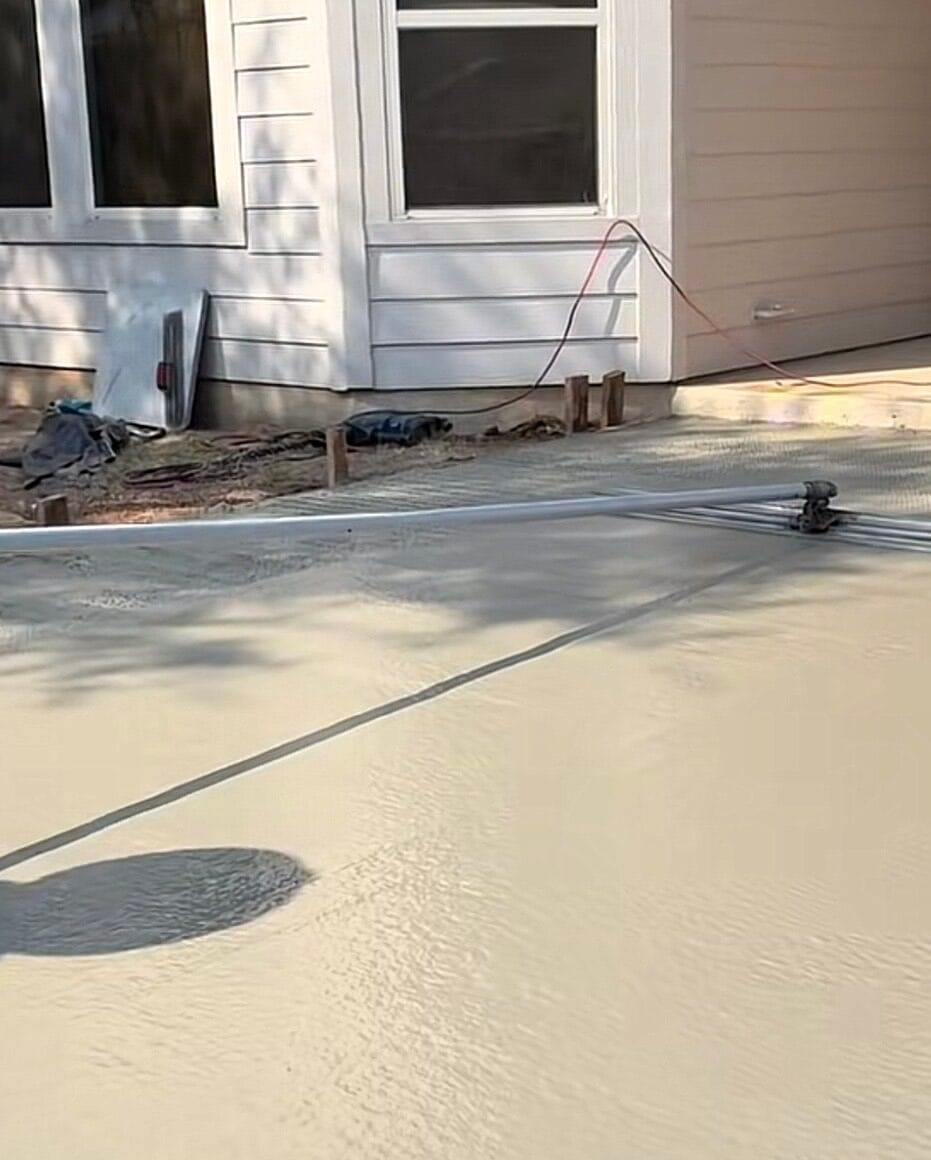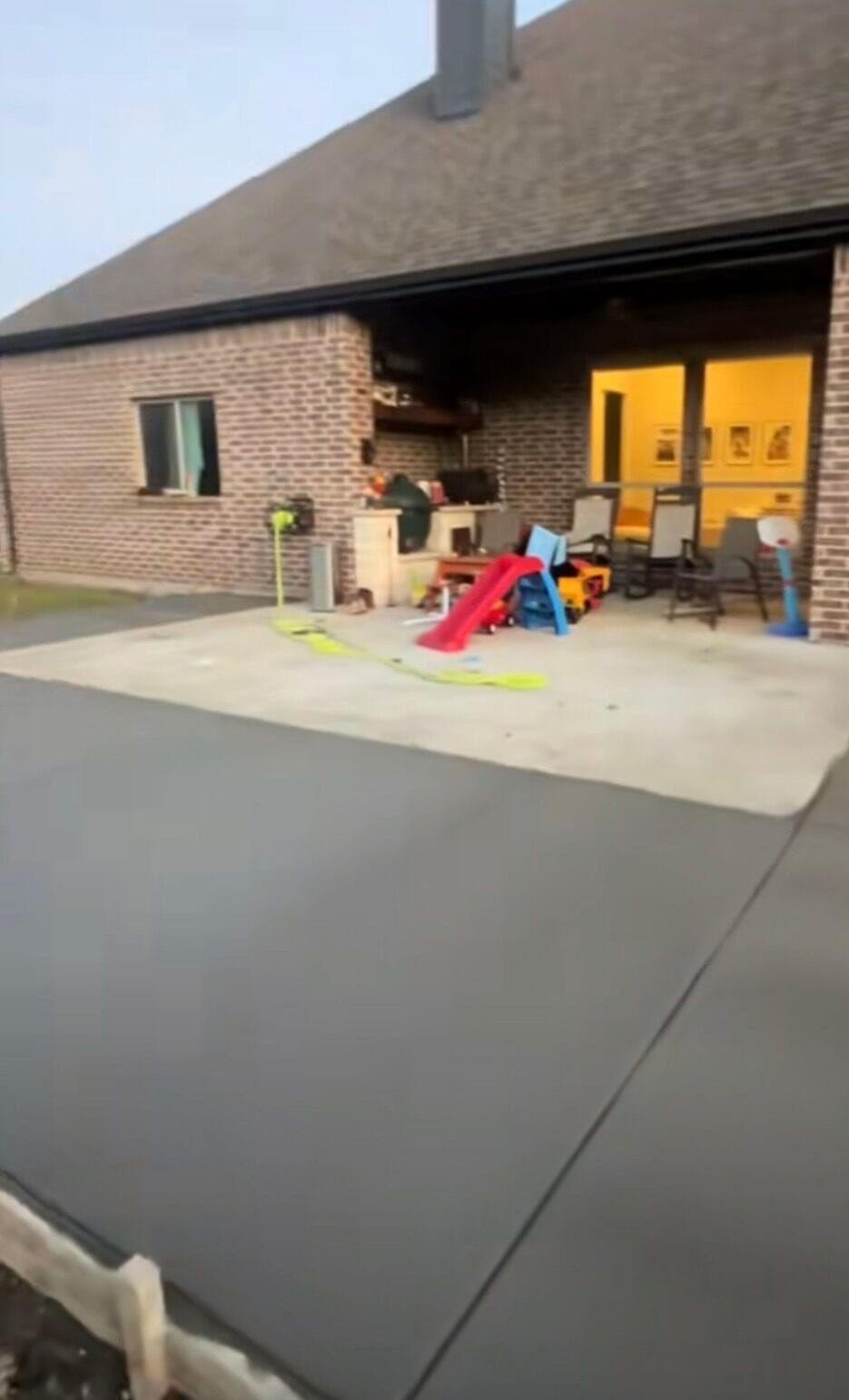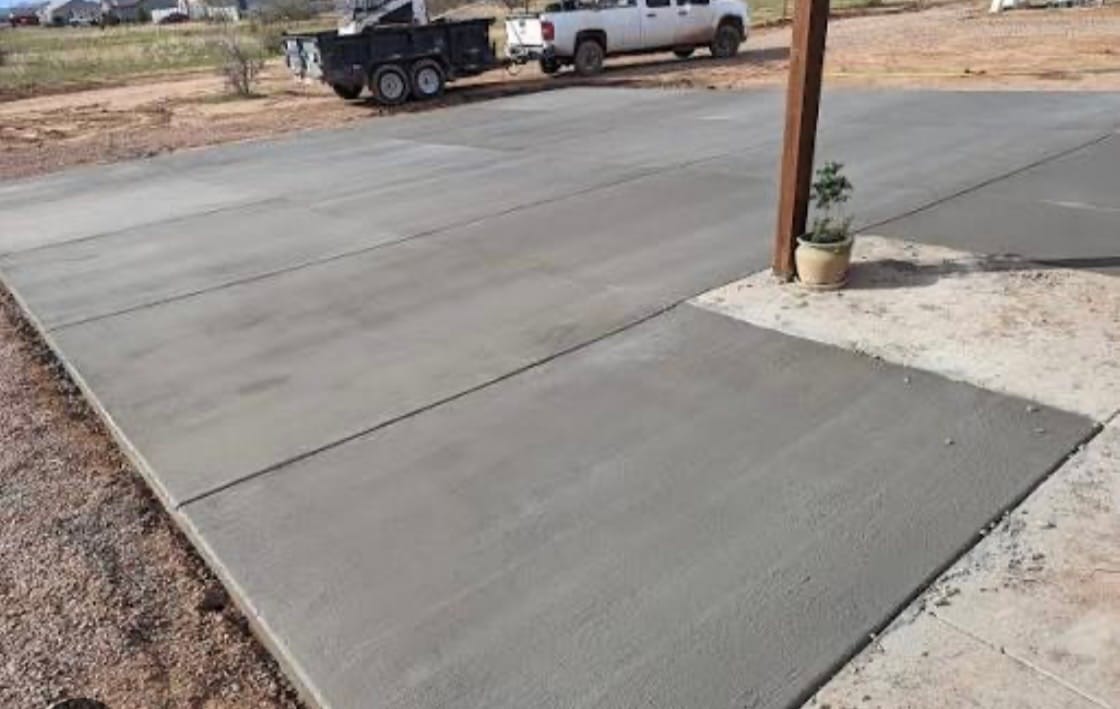
Permitting for residential concrete in Dallas-Fort Worth confuses people because the answer genuinely depends on what you're doing and which of the metroplex's several dozen municipalities you're in. There's no single DFW rule. But the distinctions that drive the answer are consistent, and knowing them tells you what to ask your city.
The key distinction: private property versus the public right of way. Work entirely on your own property, such as replacing an existing driveway slab in place or pouring a patio in the back yard, is treated differently from work that touches the driveway approach, the section between your property line and the street. The approach sits in the public right of way, and cities regulate it because it affects drainage, sidewalks, curb integrity, and traffic sight lines. Approach work almost always requires permitting and inspection, even in cities that are relaxed about flatwork.
What usually triggers a permit. Cutting a new curb or creating a new driveway where none existed. Widening an existing driveway or changing its location. Any work in the right of way, including the approach and any sidewalk crossing it. Changes to drainage or grading. Increasing impervious cover beyond a threshold, which some cities cap. And in some jurisdictions, replacement above a certain square footage even on private property.
What often doesn't. Like-for-like replacement of an existing residential slab in the same footprint, resurfacing, and crack repair frequently fall outside permit requirements. Frequently is doing real work in that sentence. It varies, and some cities want a no-fee permit on record even for straight replacement.
Dimensional rules apply whether or not a permit does. Cities set standards for approach width, driveway materials, minimum setbacks from the property line and from fire hydrants, and required thickness in the right of way. Dallas city code, for example, requires residential driveway approaches to be at least 10 feet and no more than 30 feet wide measured at the property line, and the city publishes standard construction details that specify what the approach must be built to. Your city almost certainly publishes something equivalent.
HOA approval is separate. It's not a permit and the city doesn't care about it, but your HOA may have covenants on driveway material, color, finish, and extensions. Decorative work in particular gets denied after the fact in newer subdivisions. Check before you pour, not after.
Utilities. Before any excavation, Texas law requires calling 811 at least two business days ahead so utility owners can mark their lines. This is free, it applies to homeowners and contractors alike, and hitting an unmarked gas or fiber line is an expensive mistake to own.
Who should be handling this. A competent contractor pulls the permits and knows the local standards, and that should be stated in your contract. Be cautious with anyone who tells you a permit isn't needed without knowing your city, or suggests skipping it to save time. Unpermitted work in the right of way can be ordered removed, and it surfaces during a title search when you sell.
Practical order of operations: call your city's building or public works department and describe the exact scope, ask whether it's a permit or a right-of-way permit or neither, get the approach standard if you're touching it, check your HOA covenants, call 811, then pour.
We handle permitting on the jobs we do and we build approaches to city standard across the metroplex. If you're not sure what your scope requires, call 972-921-9488 and we'll tell you what your city will want.
Free Estimate, Same-Day Service
We'll beat any written quote in the metroplex. Financing available — call and ask about our finance options.