Out past the subdivisions — Joshua, Alvarado, Cleburne, the acreage south of Midlothian — a lot of homes sit a few hundred feet back from the road on gravel or dirt. It works until it doesn't. You're regrading washboard every spring, hauling in fresh rock every couple of years, tracking mud into the house, and watching the low spots turn into standing water that eats the surface faster each season.
Converting that to asphalt is one of the more satisfying jobs we do, and also one where the quote surprises people, in both directions. Here's what's actually involved.
It starts with the base, not the asphalt. This is the part homeowners underestimate. A gravel driveway that's been driven on for fifteen years is not a prepared base. It's loose rock pressed into clay, usually with ruts, soft spots, and organic material mixed in. Paving over it directly gets you a driveway that fails in patches within two or three years.
Real prep means grading the run to establish consistent crown and drainage, cutting out and replacing soft spots where the subgrade has pumped, adding and compacting crushed base to a uniform depth, and proof-rolling it with a loaded truck to find anything that still moves. On a long rural driveway this is frequently more than half the job cost, and it's the half that determines whether you get eight years or twenty-five.
Drainage decides everything on a long driveway. A 300-foot driveway crossing a shallow draw is a drainage project that happens to have asphalt on top. Water running down the length of a driveway instead of off the sides will undermine it from below no matter how well the surface is laid. That usually means establishing a proper crown so water sheds to both sides, cutting ditches or swales along the run, and installing culvert pipe where the drive crosses a natural low point or the county ditch at the road. Skipping culvert work to save money is the most common regret we see.
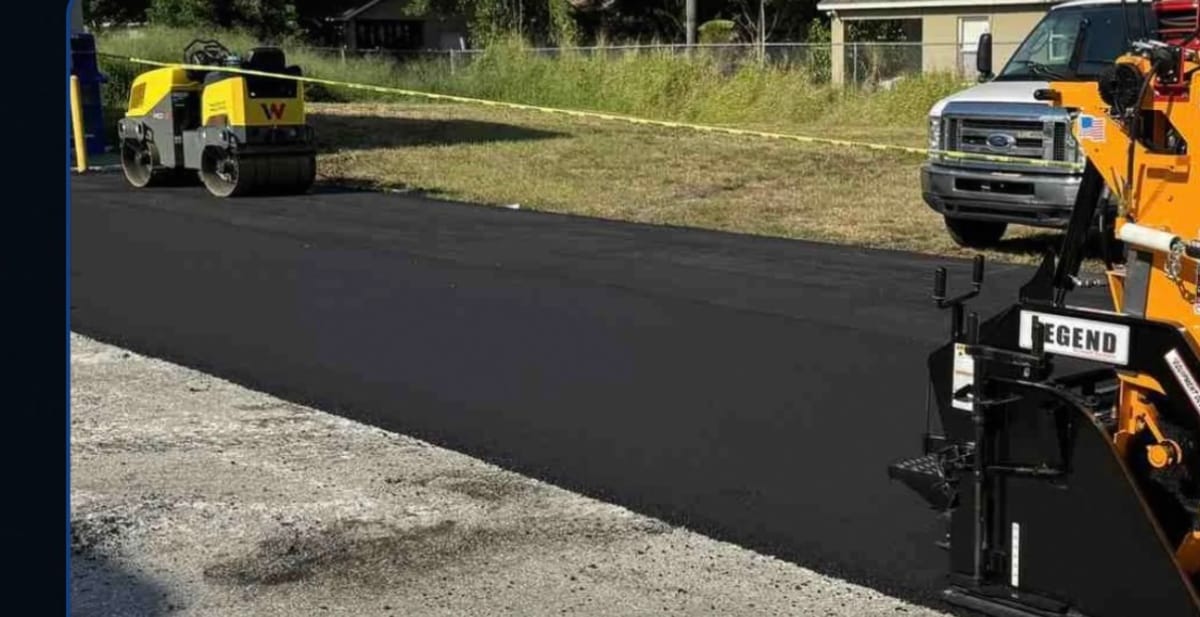
Thickness depends on what actually drives on it. A passenger-vehicle-only residential driveway typically runs two to three inches of asphalt over a compacted base. If you've got a stock trailer, a tractor, feed deliveries, or a work truck with a loaded gooseneck, that needs to go up, and the base under it needs to be thicker too. Tell your contractor honestly what the heaviest regular vehicle is. A driveway built for a sedan and used by a loaded trailer will rut, and that's not a warranty issue, that's a spec issue.
The approach at the county road. Where your driveway meets the public road is usually governed by the county or city, not by you, and it may require a permit and a specified culvert size. In unincorporated Johnson and Ellis County that's typically handled through the county road and bridge department. This is worth sorting before work starts rather than after.
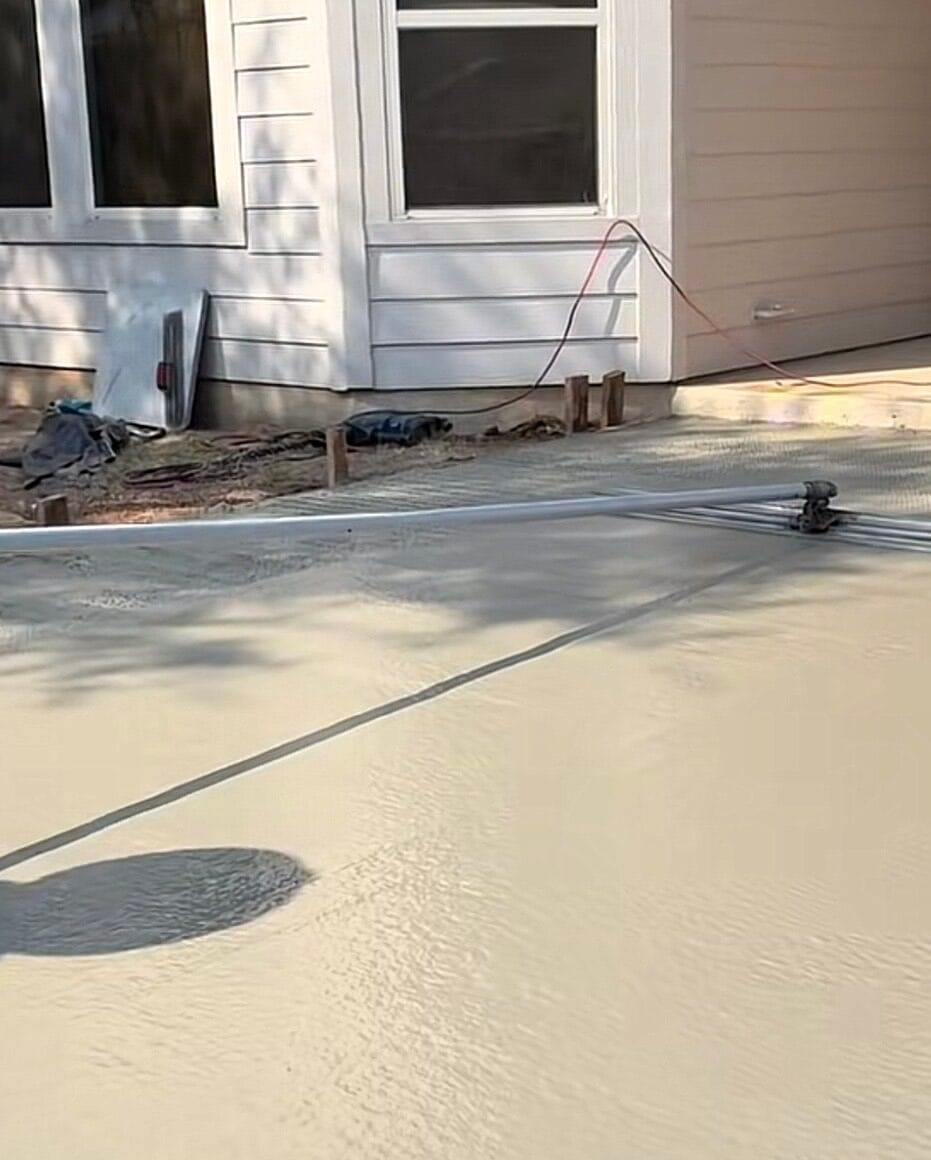
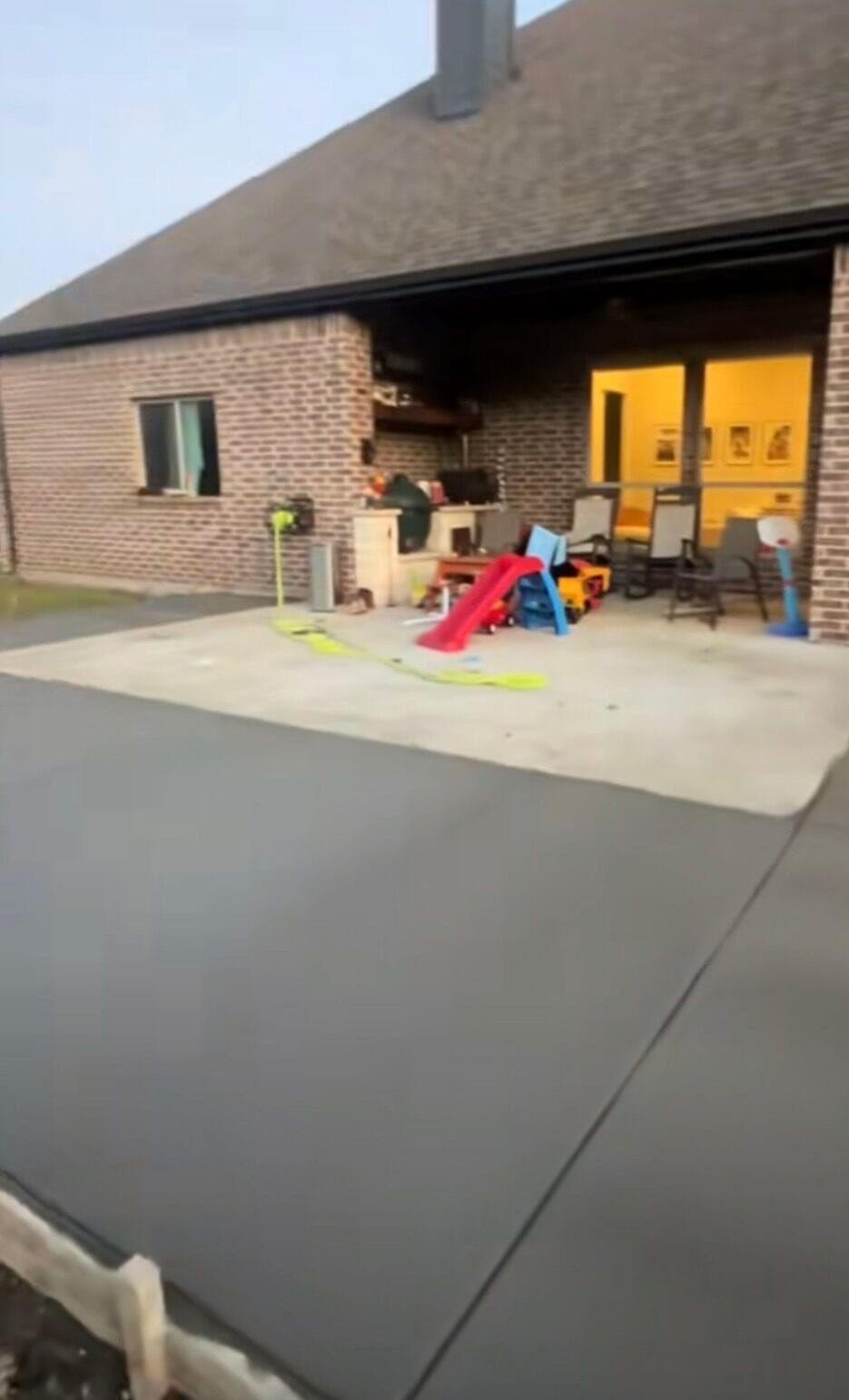
Asphalt versus concrete on a long run. For a driveway of any real length, asphalt is normally the economical answer. Its cost per square foot is meaningfully lower than concrete, it goes down in a day rather than curing for a week, and it flexes with our clay soil instead of cracking against it. Concrete makes more sense for short approaches, the apron at the garage, turnarounds that take a lot of wheel-turning in one spot, and anywhere you want a specific finished look. Plenty of the jobs we do are a hybrid: asphalt for the long run, concrete for the apron and parking area near the house.
What it costs, honestly. We won't quote a number here because the variables on rural driveways are enormous — length, width, how much base has to be brought in, whether culvert work is needed, how far the site is from a plant, and how much regrading the run requires. A 400-foot driveway that just needs base and paving and a 400-foot driveway that needs two culverts and a foot of fill through a low section are not the same project. What we can tell you is that base and drainage will be the swing factors, and any quote that doesn't itemize them is hiding something.
Living with it afterward. Fresh asphalt needs about 30 days before heavy vehicles or trailer jacks sit on it, and longer in extreme heat. Avoid parking in the same spot every day for the first summer. First sealcoat comes at roughly six months to a year, then every three to four years for a residential drive in this climate. Keep the ditches clear so water keeps moving. Done right, that's a driveway you stop thinking about.
Is it worth it? If you're regrading gravel more than once a year, hauling rock every other year, or the mud is genuinely affecting how you use the property, the maintenance you stop paying for adds up faster than people expect. It also does real things for resale on an acreage property.
We pave long rural driveways across Johnson, Ellis, Tarrant, and Dallas County and we'll walk the whole run with you before quoting, including where the water goes. Free written estimates, and we'll beat any comparable written quote. Call 972-921-9488.
Free Estimate, Same-Day Service
We'll beat any written quote in the metroplex. Financing available — call and ask about our finance options.