Sealcoating is the cheapest thing you can do to an asphalt lot and the easiest to put off, because a lot that needs seal still works fine. The bill for skipping it doesn't arrive for years, and then it arrives as resurfacing.
What sealcoat is doing. Asphalt is aggregate held together by bitumen binder, and that binder is an oil. Ultraviolet light oxidizes it, which is what turns fresh black pavement gray. As it oxidizes it gets brittle, loses flexibility, and starts releasing the aggregate at the surface, which is that loose grit you sweep off a weathered lot. Once enough binder is gone, water gets into the pavement body, and in a freeze or under traffic load that becomes potholes and alligator cracking. Sealcoat is a sacrificial surface layer that blocks UV, water, oil, and gas from reaching the asphalt underneath.
The North Texas interval. In this climate, most commercial lots want sealcoat every two to three years. DFW is harder on pavement than the national averages assume: intense UV, surface temperatures well over 130 degrees in summer, and a wet-dry swing that works the material. Residential driveways, which see a fraction of the traffic, can often stretch to three or four years.
Adjust for your actual conditions. Go toward the two-year end if the lot has heavy truck or delivery traffic, full sun exposure with no tree cover, drive aisles and entrances that take concentrated turning loads, or a drive-through lane. You can lean toward the longer end for low-traffic lots, shaded areas, and back-of-house parking that mostly sits empty.
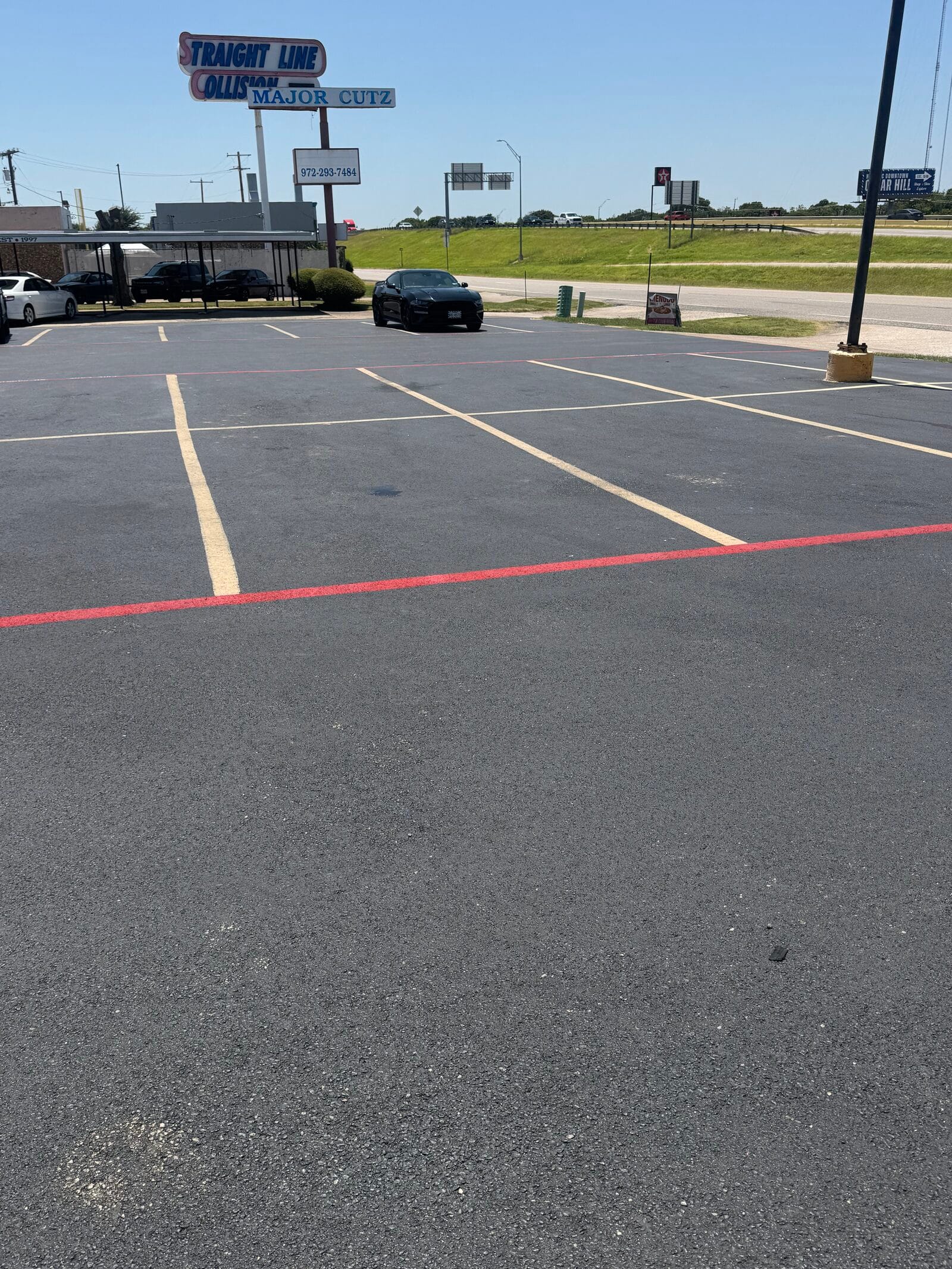
How to read your own lot. Color is the fastest signal. Fresh sealcoat is black, healthy asphalt is dark, and a lot that's gone light gray is oxidized and overdue. Rub the surface with your hand: if you come away with grit and gray dust, the binder is failing and aggregate is raveling. Look for hairline cracks starting to web, which is early alligatoring, and check whether water beads or soaks in. Soaking in means the surface is porous and taking on water.
Crack sealing comes first. Sealcoat is a thin surface coating and it will not bridge a crack. Anything wider than about an eighth of an inch needs routing and hot-pour crack sealant before the seal goes down, otherwise you've painted over an open path to the base. Published figures put sealcoat alone in the range of $0.20 to $0.50 per square foot and sealcoat with crack sealing at roughly $0.60 to $0.80. Skipping the crack work to save the difference is the most expensive savings in pavement maintenance.
When sealcoating is the wrong call. Sealcoat is preventive, not restorative. If your lot has widespread alligator cracking, potholes down to base, visible rutting, or areas where the pavement flexes under a vehicle, the problem is structural and a seal will hide it for about a season. Those lots need patching, an overlay, or full-depth repair. Any contractor who quotes sealcoat on a failing lot is selling you a paint job.
Timing in Texas. Sealer needs warm, dry weather to cure. Surface temperatures should be above roughly 50 degrees and rising with no rain in the forecast for at least 24 hours. In DFW that's a long season, spring through fall, but it's worth avoiding a pour right before a front comes through. New asphalt should cure for roughly six months before its first seal so the volatiles can escape.
One practical note: plan around your tenants. A sealed lot generally wants 24 hours before vehicle traffic, and striping goes down after that. Most commercial jobs get done in halves or overnight so the property keeps operating.
We sealcoat and stripe commercial lots and residential driveways across the metroplex, and we'll tell you honestly if your lot needs paving instead of sealing. Free estimates. Call 972-921-9488.
Free Estimate, Same-Day Service
We'll beat any written quote in the metroplex. Financing available — call and ask about our finance options.