We replace roofs across DeSoto, Duncanville, Cedar Hill, Lancaster and the rest of the southern Dallas County suburbs, and the single most common thing we hear on a first visit is some version of "I probably should have called last year." Almost nobody calls when the roof starts failing. They call when a ceiling stain shows up, and by then the question isn't just shingles anymore — it's whether the decking underneath got wet too. So let's start with how to read your own roof before it gets to that point.
The age of the roof matters more than how it looks from the ground. A standard three-tab shingle roof in North Texas is realistically a 15 to 20 year roof, and architectural shingles will typically go 20 to 30. Those are national numbers and our climate is harder than the national average — brutal summer surface temperatures, wild temperature swings, and hail. If your roof is original to a house built in the early 2000s, it is at or past the end of its service life whether or not it's currently leaking. Knowing the install date is genuinely useful information, so if you have the paperwork from a previous replacement, keep it somewhere you can find it.
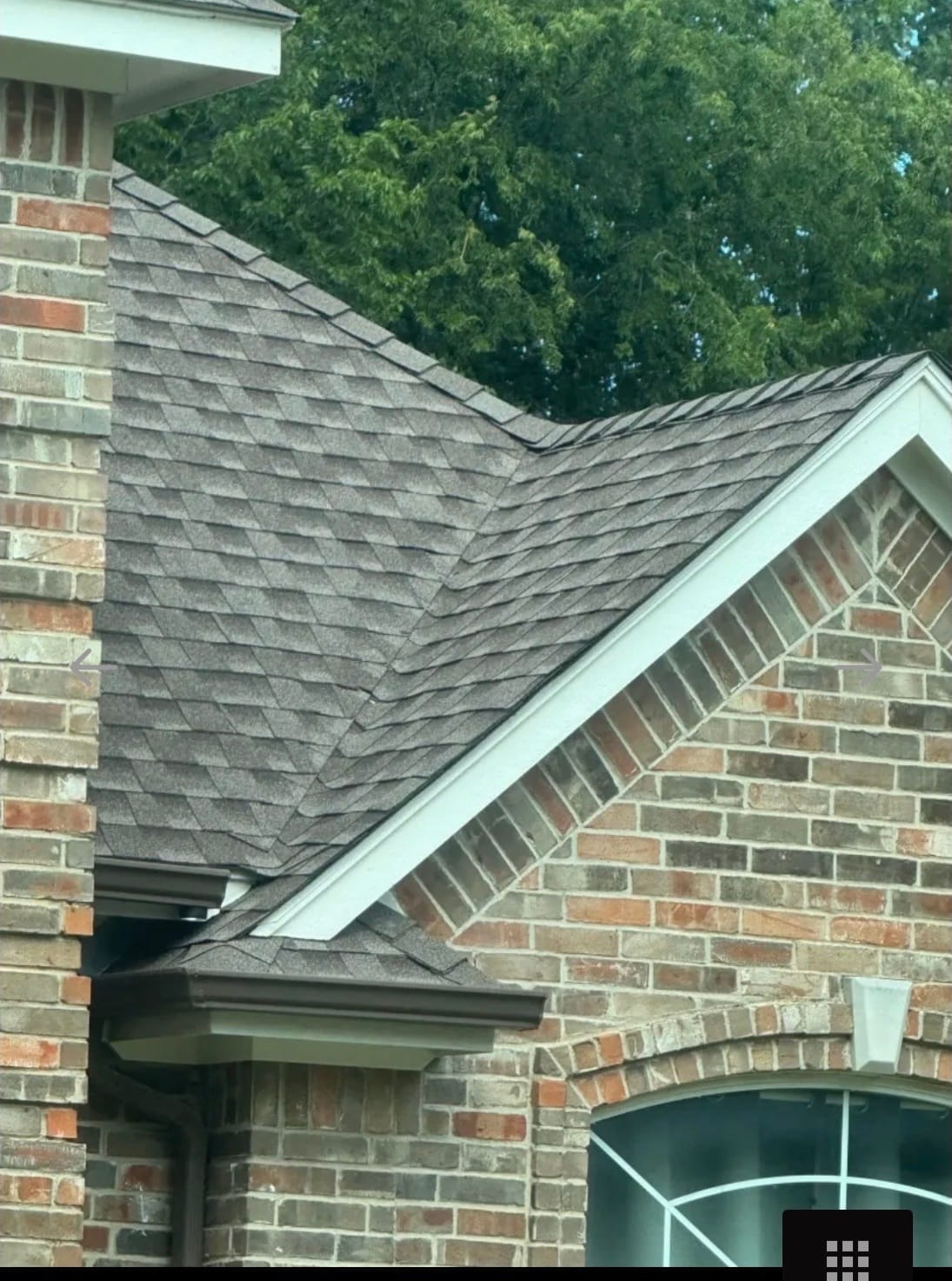
What to look for from the ground with binoculars. You do not need to get on the roof, and we'd rather you didn't. From the driveway you can see most of what matters. Look for shingles that are cupping or curling at the corners, which means the mat underneath has dried out. Look for bald patches where the granules have washed off and the shingle looks darker and smoother than its neighbors — granules are the sun protection, and once they're gone the asphalt underneath cooks fast. Check your gutters and the splash area at the downspouts for a buildup of granules that look like coarse black sand. Some shedding is normal on a new roof; a steady accumulation on an older one is not. Look along the ridge line for a sag or a wave, which points to a structural or decking problem rather than a shingle problem. And look at the valleys where two roof planes meet, because that's where the most water moves and where failures usually start.
Hail is its own category. After a storm, hail damage frequently isn't visible from the ground at all. What you're looking for is bruising — soft dark circles where the impact knocked granules loose and fractured the mat underneath. A useful proxy is to check the soft metal on your property: dents on gutters, downspouts, the AC condenser fins, mailboxes, or vent caps mean the hail was large enough and moving fast enough to have hit the roof the same way. If you have that, get the roof looked at, because hail damage on a shingle roof often doesn't leak for a year or two while the compromised area weathers open. We wrote a separate piece on what to do in the first 72 hours after a hail storm if you're dealing with an insurance claim.
Interior signs mean the water is already inside. Brown rings on a ceiling, staining at the top of an interior wall, or peeling paint in an upstairs corner mean water has been getting past the roof for a while — those stains take time to appear. Go into the attic during daylight with the lights off and look for pinpricks of daylight through the decking, dark streaking on the underside of the plywood, or damp insulation. Also look for rusted nail tips, which is a sign of chronic condensation and usually points to a ventilation problem rather than a leak.
Ventilation is the part nobody thinks about and it's why some roofs die early. A roof needs air moving through the attic — intake low at the soffits and exhaust high at the ridge or through turbines. When that airflow is blocked or unbalanced, attic temperatures in a Texas August climb far above the outdoor temperature and cook the shingles from underneath. In winter, trapped moisture condenses on the decking. A roof with bad ventilation can lose years off its life while looking perfectly normal from the street. When we quote a replacement we look at the intake and exhaust as part of the job, not as an upsell, because putting a new roof over a ventilation problem is how you end up doing it again too soon.
Repair or replace? An honest contractor will tell you when a repair is the right call, and sometimes it is. If the roof is under ten years old, the damage is localized to one area, and the rest of the field still has good granule coverage and pliable shingles, a repair makes sense. Replacement is the right answer when the roof is at or near the end of its age window, when there's widespread granule loss or curling across multiple planes, when there are multiple leak points, or when there's already a second layer of shingles up there. Be cautious about anyone who insists on full replacement for a single localized problem on a young roof, and equally cautious about anyone willing to keep patching a twenty-five year old roof indefinitely — that's just billing you twice.
What actually happens during a replacement. A typical single-family roof in this area is a one to two day job depending on size, pitch, and complexity. The crew tears off the existing shingles down to the bare decking — this matters, because you cannot properly inspect decking through an old layer. Any decking that's soft, delaminated, or water damaged gets replaced, and this is the one line item that can move after work starts, since nobody can see under the old roof until it's off. A good contractor will tell you their per-sheet price for replacement decking up front so there are no surprises. Then goes down the underlayment, ice and water shield in the valleys and around penetrations, new flashing at walls, chimneys and pipe boots, the shingle field itself, and finally the ridge cap and ventilation. Cleanup should include running a magnet over the yard and driveway for nails, more than once.
Details that separate a good roof from a cheap one. New flashing rather than reusing the old, because reused flashing is one of the most common sources of a leak on an otherwise new roof. New pipe boots, since the rubber ones are usually the first thing to fail. Proper valley treatment. Correct nailing pattern and nail depth, which is invisible once the job is done and is the leading cause of shingle blow-off in wind. Starter strip along the eaves and rakes. Ask about each of these when you're comparing quotes — a contractor who can answer them specifically is telling you something about how they work.
On cost, and why we won't give you a number here. Roof replacement pricing depends on square footage, pitch, how many layers are coming off, how much decking needs replacing, the shingle line you choose, and the complexity of the roof — valleys, dormers, chimneys, and steep sections all add labor. Published national ranges for asphalt shingle replacement vary enormously and are not a reliable guide for a specific house. What we can tell you is how to read a quote: it should itemize tear-off, decking replacement rate, underlayment, flashing, the specific shingle product, ventilation work, disposal, and warranty terms separately. If a quote is one line and one number, you have no way to compare it to anything.
Warranties come in two parts and people conflate them. There's the manufacturer's warranty on the shingle product itself, and there's the contractor's workmanship warranty on the installation. The vast majority of roof problems in the first decade are installation issues, not product defects, so the workmanship warranty is the one that actually protects you. Get its length and what it covers in writing.
Insurance, briefly. If the replacement is storm or hail related, your claim goes through your carrier and the adjuster's scope drives what's covered. Document the damage with photos and dates before any work begins, and keep every piece of correspondence. Be wary of anyone who offers to cover your deductible — that's insurance fraud in Texas and it puts you on the hook, not just them.
We install roofs throughout DeSoto, Duncanville, Cedar Hill, Lancaster, Glenn Heights, Dallas and the surrounding metroplex. We'll get up on the roof, take photos of what we actually find, and give you a written estimate that itemizes the work — including an honest answer if what you need is a repair rather than a replacement. Free written estimates, and we'll beat any comparable written quote. Call 972-921-9488.
Free Estimate, Same-Day Service
We'll beat any written quote in the metroplex. Financing available — call and ask about our finance options.