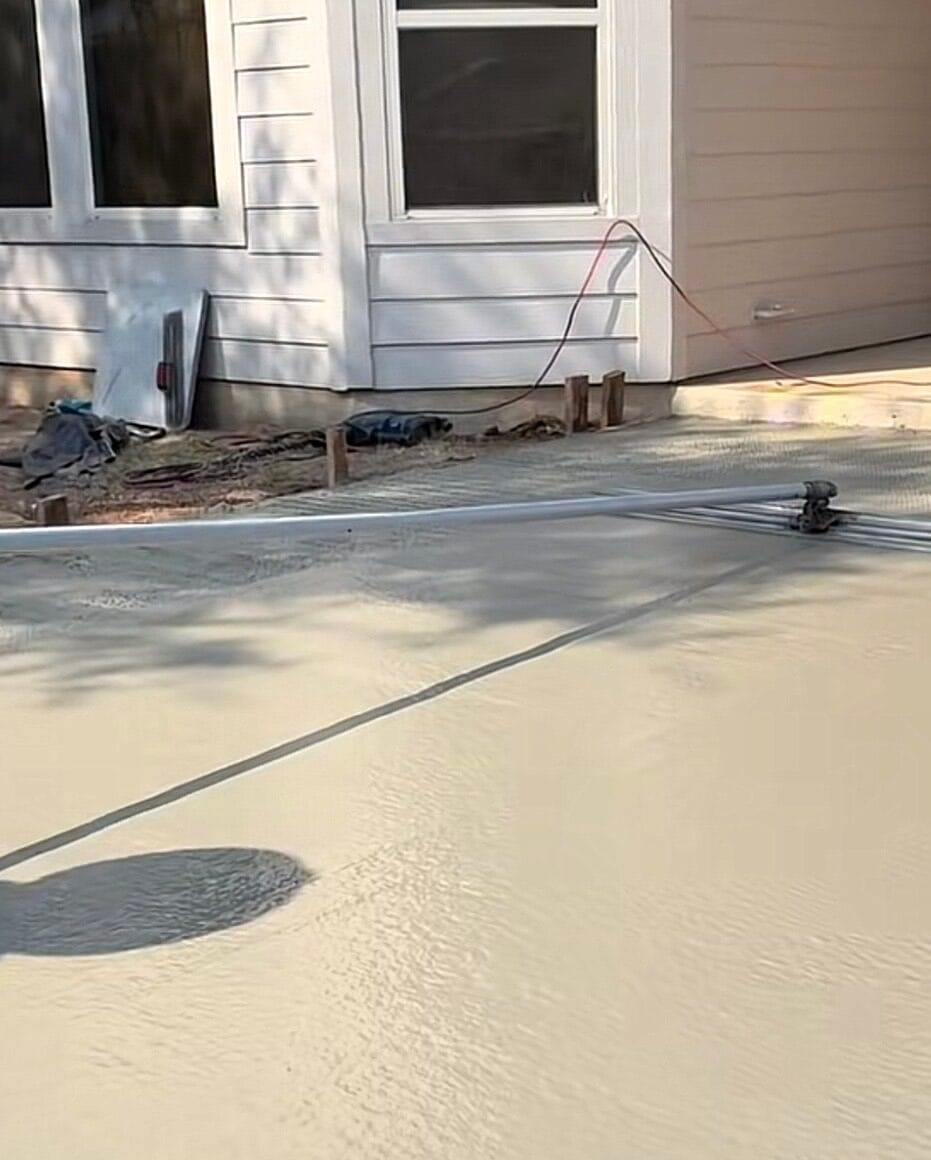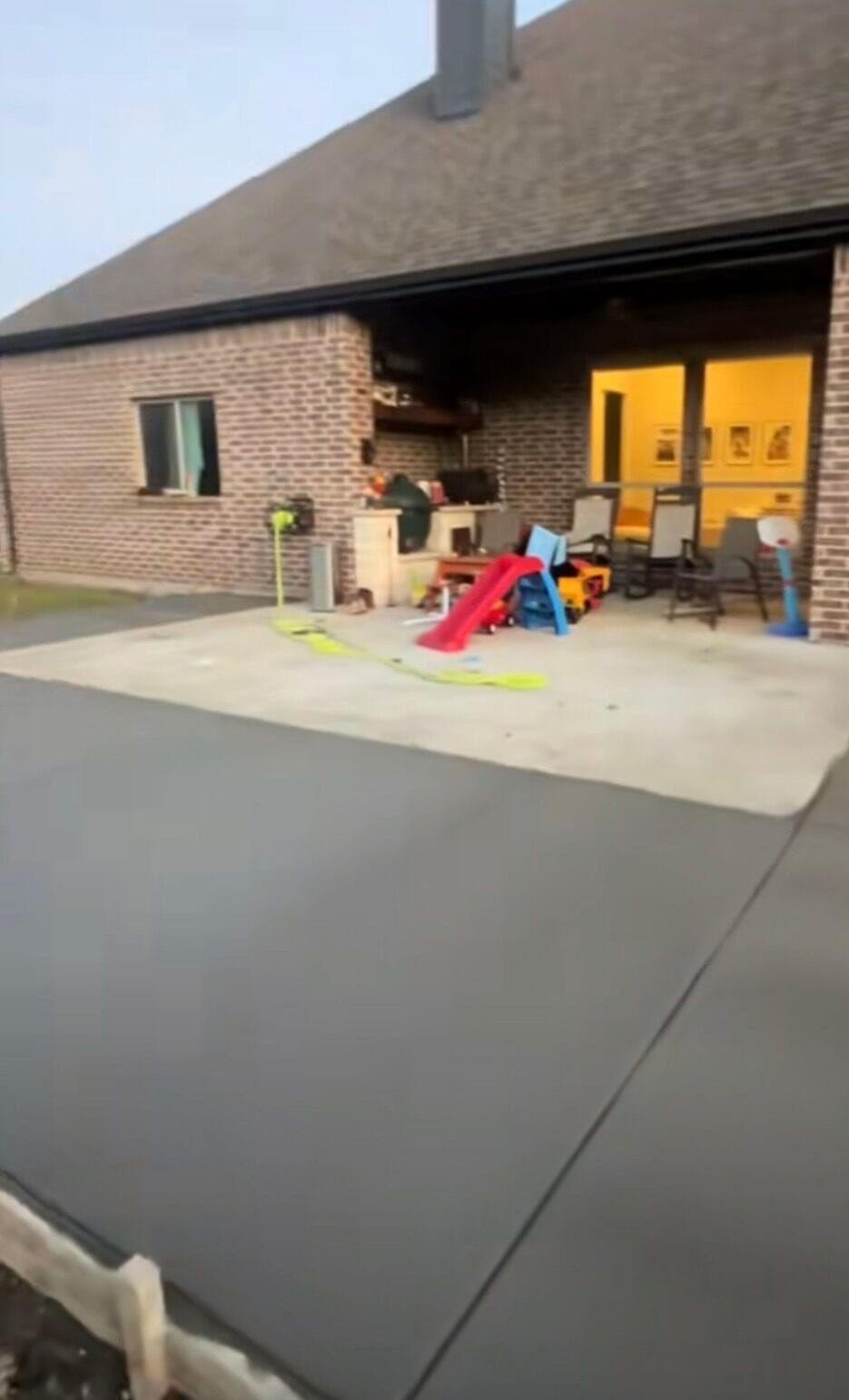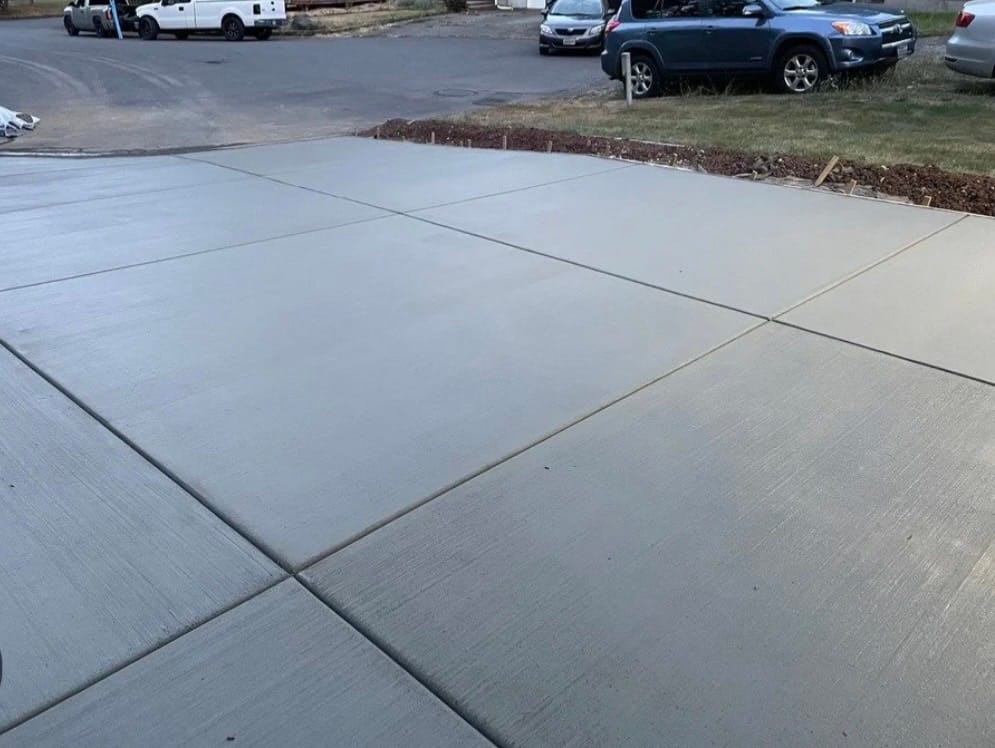
Drive any established neighborhood between Dallas and Fort Worth and you'll see the same thing over and over: driveways spider-cracked, corners dropped, slabs heaved into a ridge down the middle. Homeowners usually assume they got bad concrete or a bad crew. Occasionally that's true. Far more often the concrete was fine and the ground beneath it was never dealt with.
What expansive clay actually does. Much of North Texas sits on clay soils with a high shrink-swell potential. The clay minerals absorb water into their structure and physically expand, then release it and contract. This isn't a small effect. Across a wet spring and a hard August, the ground surface in parts of the metroplex can move several inches vertically, and it doesn't move evenly. The edge of a slab that gets roof runoff swells while the middle, shaded and dry, doesn't. That differential is what breaks concrete.
Concrete is enormously strong in compression and weak in tension. Push down on it and it shrugs. Bend it, which is exactly what happens when the soil swells under one section and not another, and the bottom face goes into tension and cracks. The crack then propagates upward until you see it.
The seasonal cycle in DFW. Spring rains saturate the clay and it swells. Summer heat and drought pull moisture out, often assisted by large trees whose roots draw water from under the slab, and the clay shrinks and pulls away, leaving voids. The slab is now unsupported in places. Then the fall rains come and it swells again. Every cycle works the slab a little harder. This is also why a driveway can look perfect for five years and then fail quickly, once a drought year finally opens a void big enough to matter.
What actually prevents it. Base preparation is most of the answer. That means excavating to grade, stripping organic material, and mechanically compacting the subgrade, typically with several inches of crushed base above it. A compacted granular base spreads load and, critically, provides a buffer layer that doesn't shrink and swell the way raw clay does. Skipping compaction is the single most common corner cut in residential concrete, and it's invisible the day the job finishes.
Correct thickness and reinforcement come next. Four inches is standard for cars, five or six for heavy vehicles. Reinforcement doesn't stop concrete from cracking, and any contractor who tells you it does is overselling. What rebar or welded wire does is hold the two sides of a crack together and in plane, so a hairline stays a hairline instead of becoming a trip hazard with one side an inch higher than the other. Rebar has to sit in the middle third of the slab on chairs to do that. Rebar lying on the ground and pulled up with a hook as the pour goes is a coin flip.
Control joints are the third piece. Concrete shrinks as it cures and it is going to crack. Saw-cut joints, cut to about a quarter of the slab depth and spaced roughly 24 to 30 times the thickness in feet, create a deliberate weak line so the crack forms where you chose. A 4-inch driveway wants joints around every 8 to 10 feet. Missing or too-shallow joints is why so many slabs have a random crack wandering across the middle.
What you can control after the pour. Drainage does more than people expect. Get roof runoff away from the slab edge with gutters and downspout extensions so one side isn't being repeatedly saturated. Keep moisture reasonably consistent rather than swinging between soaked and bone dry, which in a severe drought can mean soaker hoses at the perimeter. Be aware of large trees within about a canopy's width of the slab, since they'll pull moisture out and create voids. And seal the concrete every few years to keep water and oil out of the surface.
When a crack matters and when it doesn't. Hairline surface cracks with no vertical displacement are cosmetic and normal, and sealing them keeps water out. Cracks wider than about a quarter inch, any vertical offset between the two sides, sections that rock under a vehicle, or a slab that's visibly heaved or dropped at the apron are structural. Those are worth an opinion before they become a full replacement.
We've been pouring concrete in this soil since 1985 and we prep the base every time, because we're the ones who'd have to come back. Free written estimates across DFW. Call 972-921-9488.
Free Estimate, Same-Day Service
We'll beat any written quote in the metroplex. Financing available — call and ask about our finance options.